

The “Sleep Guide” for Precision Display Cores: The Science o
In numerous electronic products such as smart car dashboards, smart home appliances, and portable medical devices, the LCM (Liquid Crystal Module) serves as the “face” of human-machine interaction, making its performance and stability critical. A high-quality LCD screen, from the moment it rolls off the production line at LCD display manufacturers to its integration into the final product, may undergo processes like transportation and warehousing. How can we ensure this “display heart” remains in optimal condition throughout this journey? Scientific storage methods are key.

Improper storage conditions are the “silent killer” of liquid crystal displays. This article delves into the risks to avoid and key considerations during the storage of LCM (Liquid
Crystal Module) components. These principles apply universally, whether you use standard or customized LCD screens.
Risk 1: Environmental Temperature and Humidity Imbalance—Irreversible Damage to Liquid Crystal Materials
The core of an LCD module lies in its liquid crystal material—a substance existing between liquid and solid states—which is extremely sensitive to temperature and humidity.
Low Temperature Risk : If storage temperatures persistently fall below specification requirements, liquid crystal materials may solidify, causing deterioration in their physical
properties. This damage is often irreversible and cannot be restored by returning to normal temperatures.
High Temperature Risk: Conversely, excessive ambient heat accelerates thermal motion, disrupting the ordered alignment of liquid crystal molecules and causing them to fully
transition to a liquid state. This irreversible change may permanently alter optical properties, resulting in display failure.
High Humidity Risk: Moisture is the arch-enemy of polarizers and ITO electrodes. Excessive humidity causes bubbling and delamination of the polarizer, while water vapor slowly
corrodes the delicate ITO circuitry. This directly results in display abnormalities or irreversible damage to the LCD screen.
Technical Recommendation: Reputable LCD display manufacturers explicitly specify storage temperature and humidity ranges in their technical specifications. Strict adherence to
these environmental conditions is paramount for ensuring module longevity.
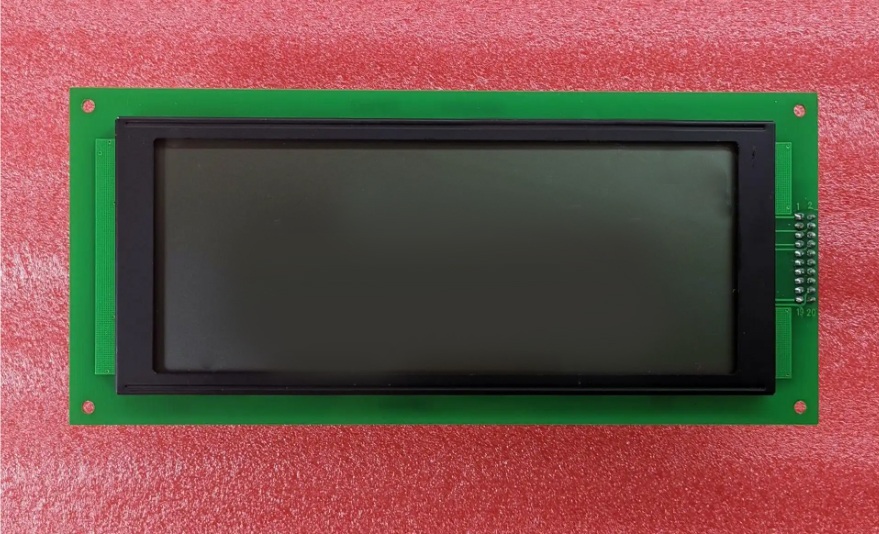
Risk 2: Physical Impact and Stress—The Fragile Body of Glass Substrates
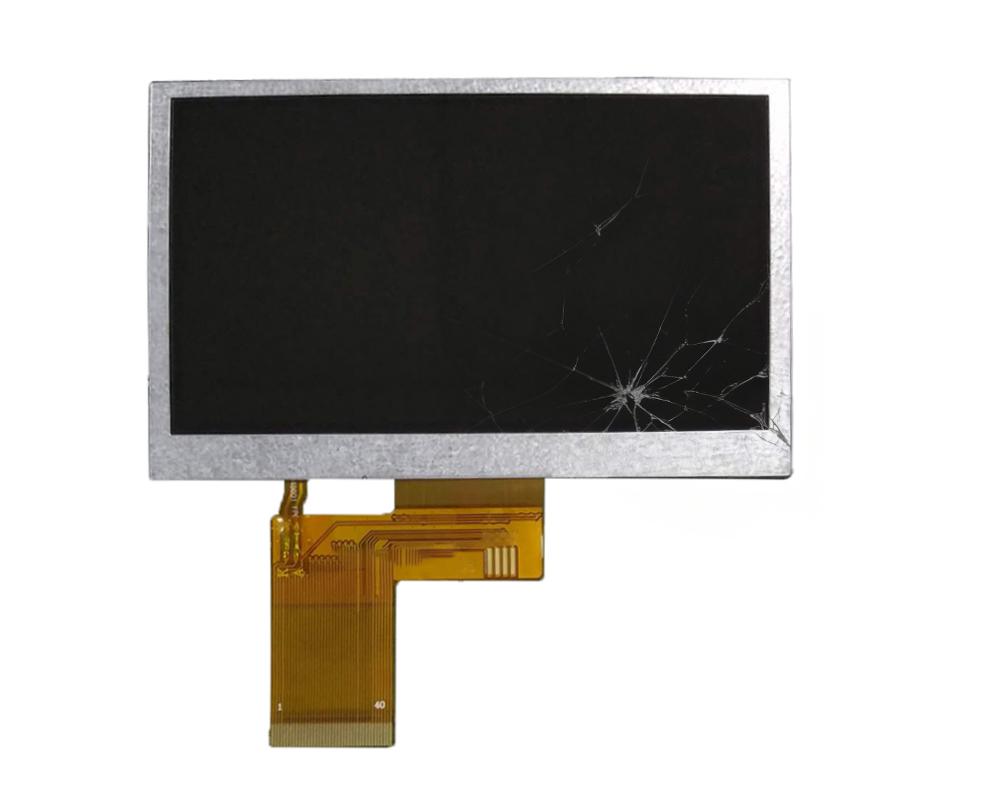
At the core of any LCD screen lie two thin glass substrates. Though tempered for strength, they remain inherently fragile, particularly at the module's edges and corners.
During handling or stacked storage, even minor drops or impacts with hard objects can transmit invisible stress, leading to internal glass fractures, liquid crystal leakage, or damage to drive circuits. This poses a particular risk for custom-shaped or ultra-thin LCD screens.
Technical Recommendation: Handle with care during storage, avoid stacking too high, and ensure adequate packaging cushioning (such as anti-static foam) is in place to provide full protection for the fragile LCD module.
Risk Three: Surface Contamination and Corrosion—A Slow-Acting Poison
During storage, if contaminants like dust, water droplets, or sweat stains accumulate on the LCD screen surface and remain untreated, they can cause long-term damage.
Water Stain Residue: Prolonged water droplets can leave stubborn stains on the screen surface. They may even chemically react with the polarizer, causing discoloration.
Electrode Corrosion: As mentioned earlier, moisture from humid environments is the primary cause of ITO electrode corrosion. This directly leads to circuit breaks, resulting in
display issues like broken lines and black spots.
Technical Recommendations: Maintain a clean, dry storage environment. Immediately wipe any surface contaminants with a soft cotton cloth or lens paper. For stubborn stains,
gently dab with a small amount of high-purity alcohol. Never use any corrosive chemical solvents.

Conclusion:
An exceptional LCD module is the result of both outstanding design and meticulous post-production care. Rigorous storage protocols, though seemingly simple external condition
controls, are in fact the core technical elements ensuring reliability and longevity.
As product developers and manufacturers, deeply understanding and implementing these scientific storage principles not only effectively reduces defect rates but also provides a solid
foundation for the final product quality. We hope this article provides valuable insights for your projects, enabling every precision LCD screen to shine brilliantly within your products.
For further inquiries, please feel free to contact us. (Jason@jrsjp.com)